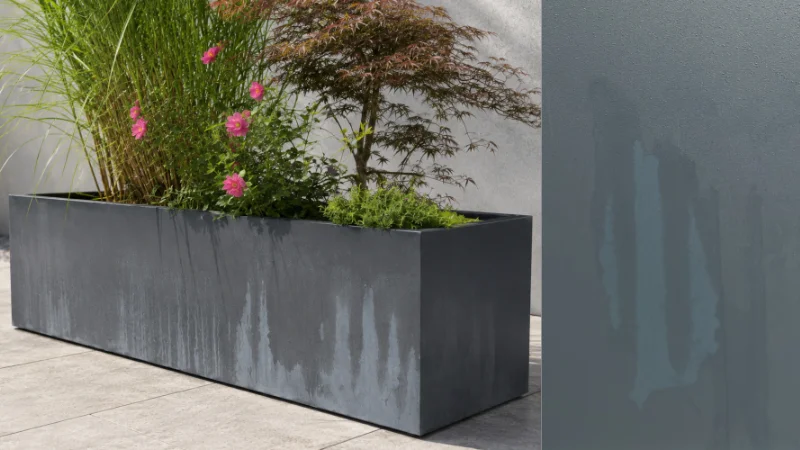


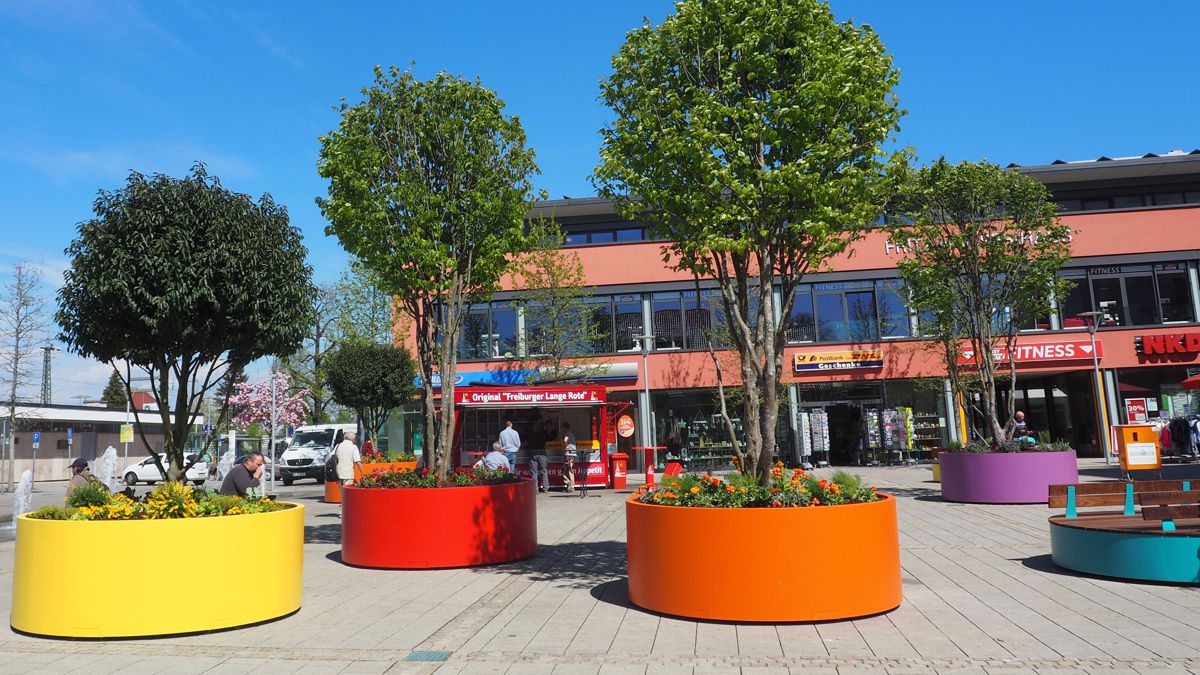
Color-coated surfaces bring life to gardens and public spaces.

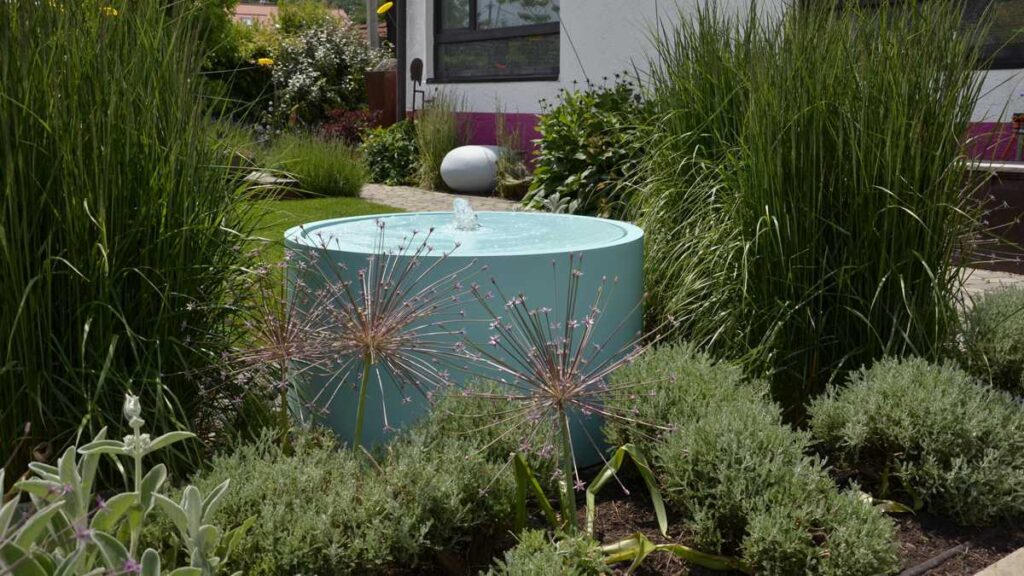
In addition to playing with shapes and materials, color is a great design tool to bring life to the garden. But you can not only set accents in the garden with skillfully designed beds that provide a lush play of colors in every season. Our high-quality metal objects made of color-coated stainless steel, such as fountains, planters or privacy screens, are also a great stylistic element for an individual garden.
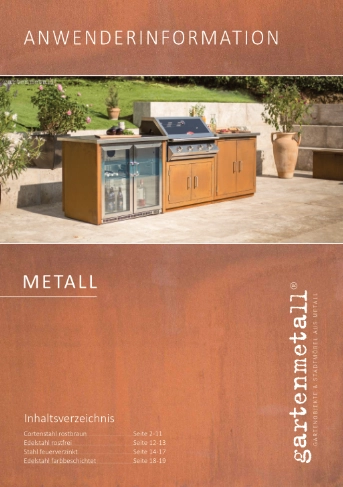
User information: Metal
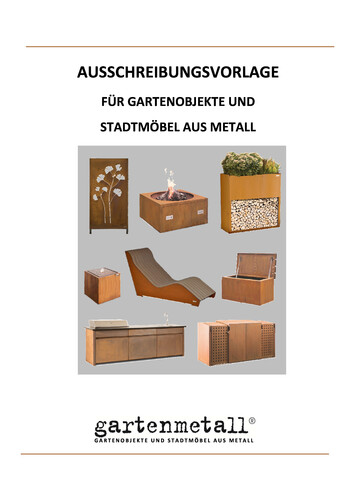
Tender for base material
We always use stainless steel for our colour-coated garden features. Even if the coating is damaged during transport, assembly or subsequent use, the underlying material remains corrosion-resistant.
At the same time, stainless steel offers high dimensional stability for large-scale components. As screws, water spouts and other components are also frequently made of stainless steel, this avoids unfavourable material combinations.
The result is durable, high-quality garden features that require little maintenance and have a long service life.
Detailed technical information: In our technical information you can find out why we manufacture painted garden features from stainless steel rather than hot-dip galvanised steel or aluminium. The PDF covers, amongst other things, corrosion protection, dimensional stability, repair options and cost-effectiveness.
In the past, we hot-dip galvanized simple steel - as described in the textbook - and then powder-coated it. This is called a duplex system. To this day, this is required in many tenders. However, we have made the experience that this method is unsuitable for garden objects with a large surface area: On the one hand, hot-dip galvanizing always results in slight warping of large-surface objects, which is usually rejected by the building owners. On the other hand, with powder-coated objects, scratches, for example, can hardly be repaired on the construction site. We have had better experience with painted surfaces: Damaged areas such as scratches or signs of use that occur during assembly or through use can be quickly and easily repaired with the repair paint supplied.
If stainless steel is used as the base material, the coating thickness is relatively unimportant in terms of corrosion resistance and durability, as the base material is already "rust-free". An adhesion primer is normally applied to the stainless steel and then the top coat with color pigments. Standard coating thicknesses are 70-80 µm. If higher layer thicknesses are required, we are happy to offer this as a special design.
Particularly in the transition area between the garden object and the ground, damage to the paint often occurs during installation, for example, when the objects are dragged across the ground or placed on a hard surface without a protective intermediate layer. Therefore, handle the objects with care during installation and place non-metallic materials such as plastic or rubber mats underneath as a protective layer.
If everything stands securely, then you should regularly (at least annually) inspect the surfaces for damaged areas and immediately repair them with the supplied repair paint. In this way, you can prevent scratches and quirks from becoming the nucleus for the adjacent surface and ensure that you can enjoy the splashes of color in your garden for a long time.
On color-coated surfaces, a so-called bleaching effect may occur under certain conditions. This results in light spots, lightening, or cloudy discoloration on the surface. This is caused by an unfavorable combination of moisture in or under packaging materials and intense heat, such as from direct sunlight. If surface temperatures reach approximately 60°C to 80°C, components of the packaging materials may react with the coating.