

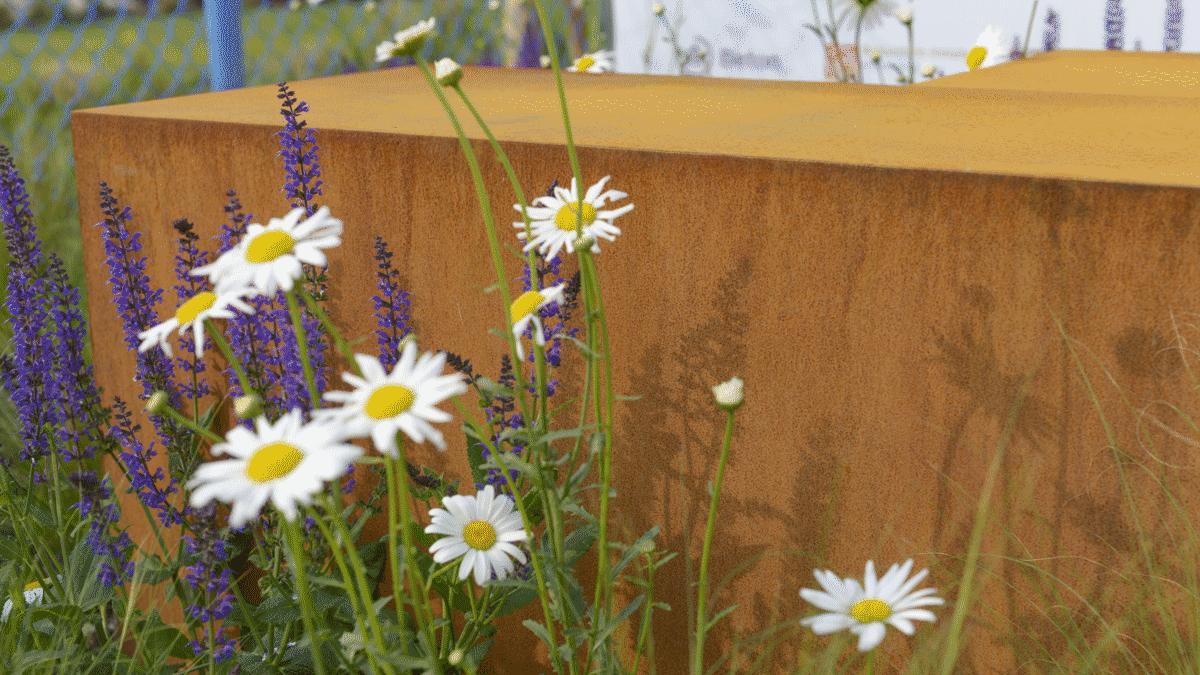
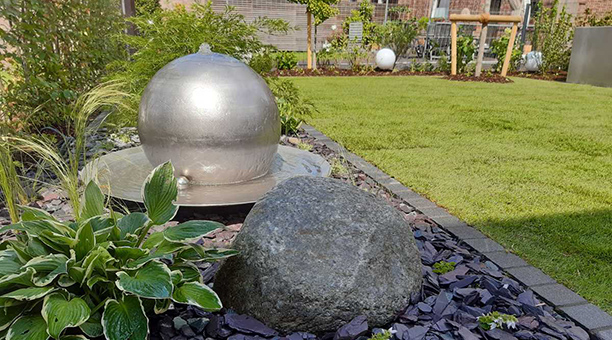
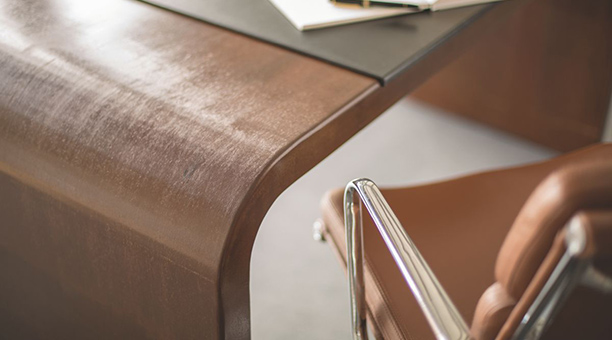
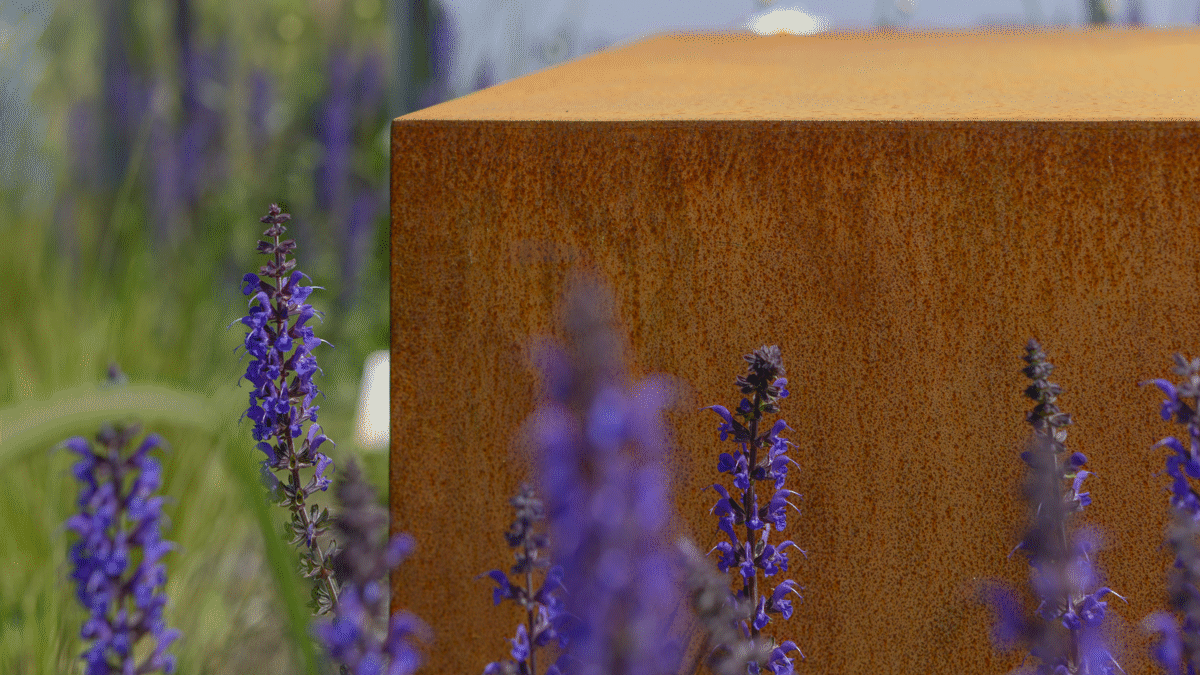
A man wearing gloves wipes a series of rusty metal plates while on a road in an industrial setting.

Care for high quality metal garden objects and street furniture

Every material needs a certain amount of care - even if it is only the removal of coarse dirt such as bird droppings or plant residues.

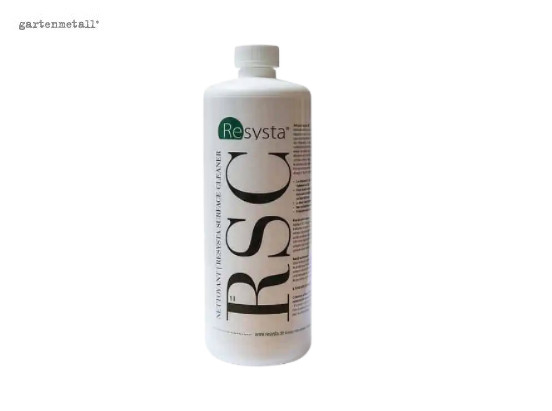
For our garden objects and street furniture, we have metal cleaner products on offer that you can use to clean, maintain and protect your metal objects and remove even stubborn dirt. While rust deposits are normal on corten steel, rust stains need to be removed from time to time on stainless steel. For this purpose, we have e.g. an agent against rust stains on stainless steel in our offer, as well as a gentle metal cleaner for the noble surfaces.

Treating Surfaces and Properly Maintaining Metal Objects

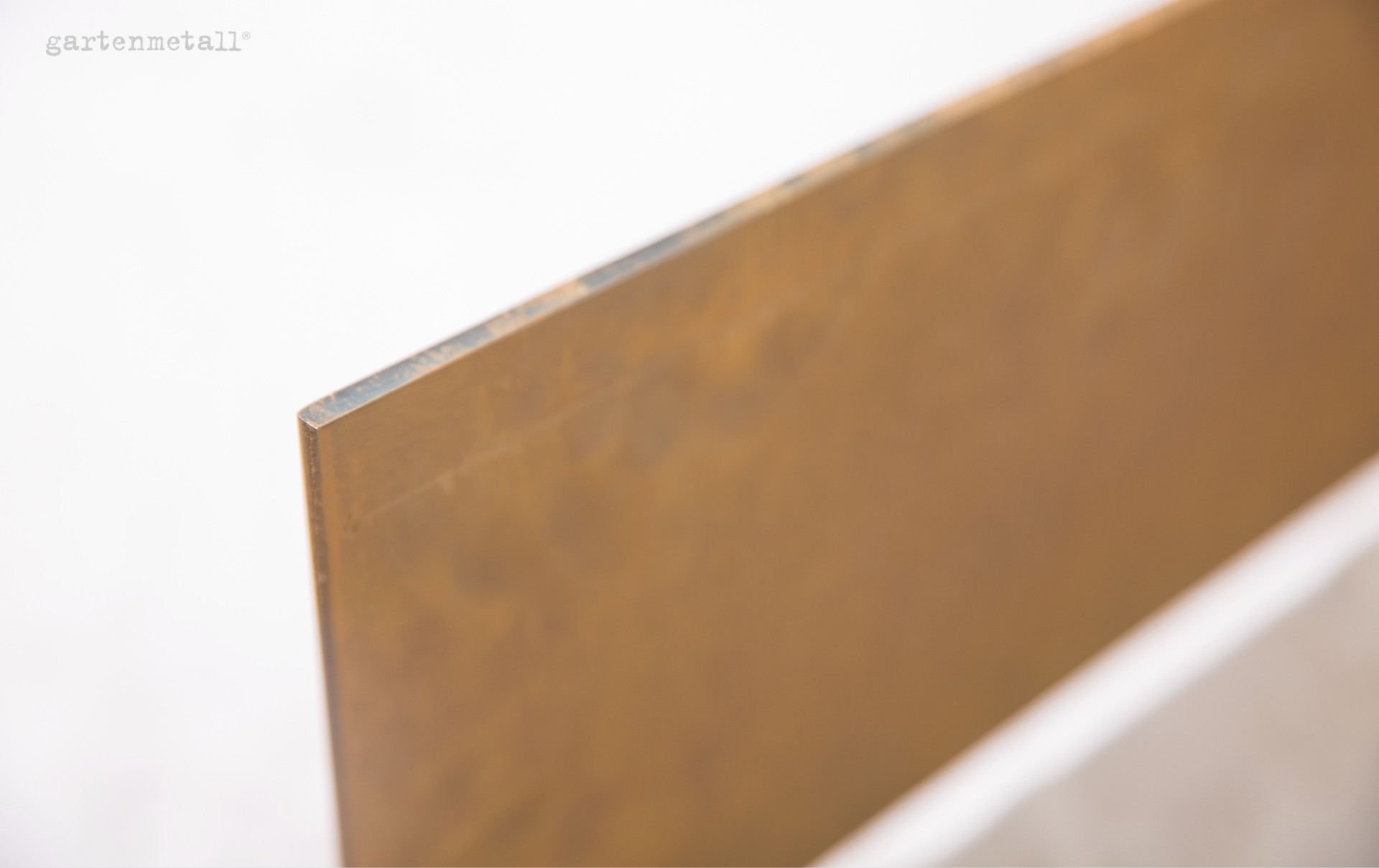
A Corten steel surface should already appear rust-red at the time of installation; a finished patina surface may transfer color at contact points; or brown corrosion spots may appear on stainless steel after transport and installation. At first glance, these cases appear to be the same maintenance problem, but they require different treatments.& nbsp;

For Corten steel, products are available to accelerate rusting, even out the rusted surface, and fix a fully formed patina. With stainless steel, on the other hand, the main focus is on removing dirt and treating existing corrosion spots in a manner appropriate for the material. Therefore, it is not only the material that is decisive, but also the condition of the respective surface.

Frequently Asked Questions About Corten Steel Surfaces and Stainless Steel Care

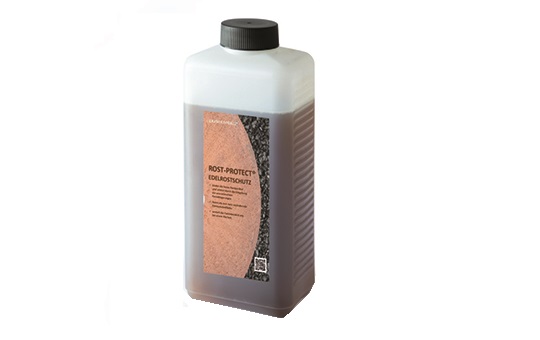
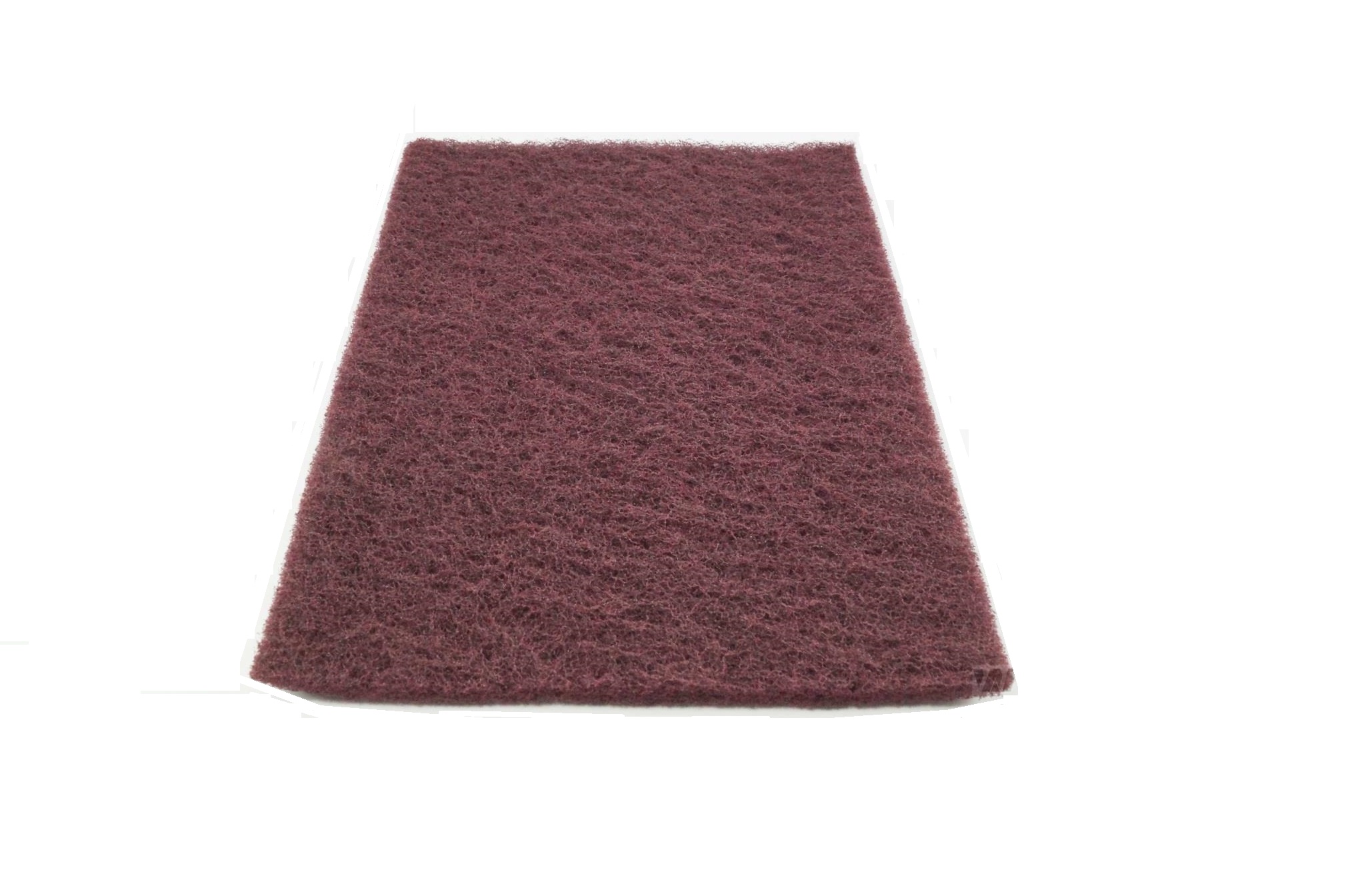
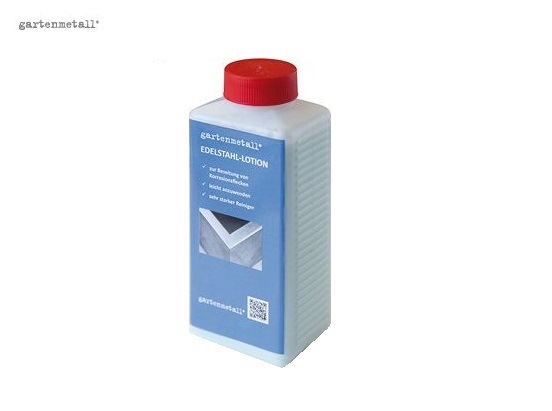
That depends on the desired finish. The SUPER-ROST pad is used to more quickly create a visible, elegant rust finish on bare Corten steel. ROST-PROTECT® is applied to an already formed rust surface to seal it. A SCOTCH-PAD abrasive pad can be used if a pre-rusted Corten steel surface needs to appear more uniform. The EDELSTAHL-LOTION is intended for corrosion and rust spots on stainless steel.

Under natural weathering conditions, the visible patina on Corten steel begins to form after about two to three weeks. If a component is intended to have a rust-red surface shortly after installation, the process can be accelerated using the SUPER-ROST pad. When applied properly, the first visible patina surface forms within about 24 hours.

However, the color and texture still depend on the material and environmental conditions. Temperature, humidity, and light influence the development of the rust surface.

The first visible changes begin after about two to three weeks under appropriate weathering conditions. It can take about one and a half to three years for the characteristic hybrid tea rose surface to fully develop.

The alternation between moisture and drying is important for this process. Areas that remain permanently damp or cannot dry out sufficiently behave differently than surfaces exposed to the elements.

Yes. A fully weathered hybrid tea rose surface, for example, can be treated with ROST-PROTECT®. The natural oil penetrates the open-pored rust surface, binds free rust particles, and preserves the existing condition.

This also changes the appearance: The rust color becomes more intense and darker, and the surface takes on a satin-matte finish. Since ROST-PROTECT® is virtually impossible to remove from the rust layer later on, it is recommended to test it on a small area before applying it to the entire surface.

ROST-PROTECT® is intended for fully developed and absorbent hybrid tea rose surfaces. The surface must be clean, free of grease, and dry. The product should not be used on bare Corten steel.

Before sealing, you should therefore check whether the desired color and texture of the rust surface have already been achieved. The condition at the time of treatment will then be largely fixed.

ROST-PROTECT® binds free rust particles and can thus significantly reduce rust deposits and color transfer upon contact. This is particularly relevant for surfaces that are regularly touched or cleaned, such as tables or countertops.

When adjacent to light-colored surfaces, however, careful design planning remains important. Water drainage, drip edges, weathering, and the distance to sensitive surfaces should be taken into account as early as the design phase of the metal object.

No. ROST-PROTECT® is not intended for areas that are constantly exposed to water, such as the interior of a water basin or fountain.

With Corten steel in particular, it is important to distinguish between a weathered surface that can dry out regularly and constant contact with water.

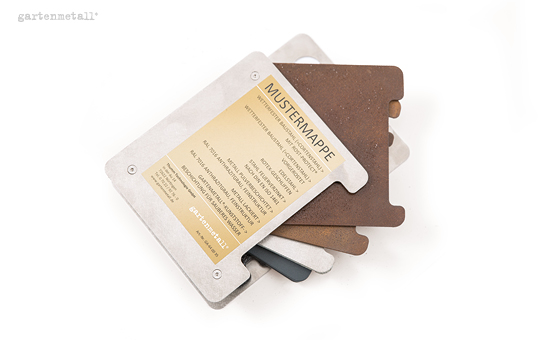
Differences in color and texture are an inherent part of the aging process of Corten steel. If a pre-weathered surface is nevertheless to be visually uniform, it can be treated with a suitable SCOTCH-PAD abrasive pad. 

However, it is not possible to reliably achieve a completely uniform, precisely defined rust color with naturally weathered Corten steel. If a project requires a consistently reproducible color, a color-coated metal surface in a corresponding rust-brown shade is the more controllable option.

Even stainless steel can develop rust spots. Often, this is not due to corrosion of the base material, but rather to foreign iron particles that end up on the surface—for example, from tools, transportation, machining, or other metal parts—and rust there.

Such deposits should be removed. For light and recent stains, mechanical cleaning may be sufficient. For more pronounced corrosion stains, a stainless steel cleaner designed for this purpose is recommended.

The STAINLESS STEEL LOTION can be used on severe corrosion spots on stainless steel. Apply it evenly with a sponge or cleaning cloth. After letting it sit for about five minutes, rinse the surface thoroughly with water and then dry it with a soft cloth.

The treated surface must not dry out while the product is taking effect. For stubborn stains, the process can be repeated. Before use, test the product on an inconspicuous area to see how the surface reacts to the treatment.

No. EDELSTAHL-LOTION is a powerful cleaner for corrosion stains and is not intended for routine maintenance cleaning.

For normal soiling, a milder cleaner is sufficient. In particular, outdoor surfaces that are not exposed to rain should be regularly cleaned of dirt, organic deposits, and greasy residues.

Whether a Corten steel surface should be allowed to rust more quickly, intentionally left in its natural state, visually matched to its surroundings, or sealed once the rusting process is complete depends on its use, exposure to the elements, contact with water, and adjacent materials. With stainless steel, on the other hand, the type of soiling determines whether regular maintenance cleaning is sufficient or a stronger cleaner is needed.

Would you like to determine which product is suitable for your metal object and its intended use before treatment? Gartenmetall is here to assist you with technical questions regarding Corten steel and stainless steel surfaces.

Noch Fragen zur Oberflächenbehandlung?

Kontakt

+49 (0) 70 22 / 92 76-0 Call

Mon.-Thurs. 7:00 a.m. – 4:00 p.m. Fri. 7:00 a.m. – 3:00 p.m.

Message via WhatsApp

Chat on WhatsApp

Contact form

Fill out our contact form

CONTACT