





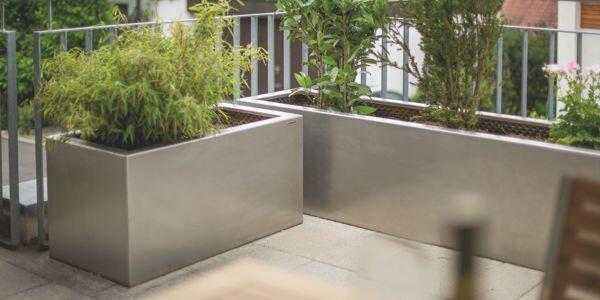
Plant troughs TERRESTA stainless steel with Rotex cut: elegant companions for any (roof) garden.

Steel grades under the term "stainless steel" have a high corrosion resistance. The reason lies in the protective film formed on the surface by the chemical composition, which is called "passive layer". Stainless steel has a unique ability: it is self-healing. Due to its alloying agent content, an extremely thin, transparent passive layer forms on the surface. Even if the corrosion-resistant steel is scratched or otherwise damaged, this passive layer, which is only a few atomic layers thick, instantly reforms under the influence of oxygen from air or water. This explains why stainless steel needs neither coatings nor other forms of surface protection.
A certain degree of care must, however, also be given to the stainless steel surface in order to maintain a good visual appearance.
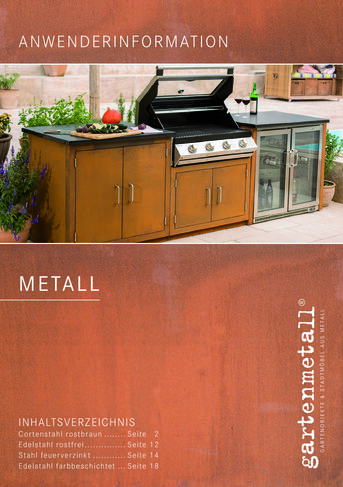
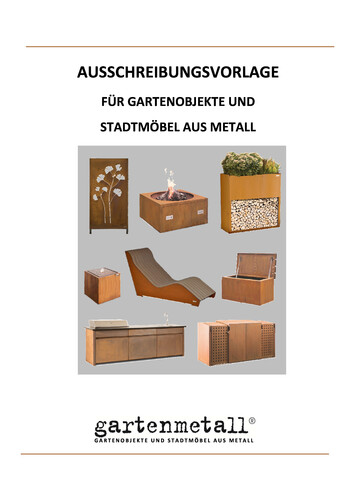
User information METAL Tender for basic material
Stainless steel is not just stainless steel. In almost all cases, we use the particularly high-quality and corrosion-resistant stainless steel with the material number 1.4404 (V4A) for outdoor use. Compared to "normal" stainless steel (V2A), this stainless steel has an increased resistance to chlorides, acids and sulfur dioxide. However, we generally advise against the use of water additives containing chlorides, e.g. to reduce water turbidity. If the dosage is too high, corrosion may occur despite the robustness of the material.
In principle, Gartenmetall® supplies all surfaces. Known surfaces are "brushed" or "ground". However, daily practice in gardening and landscaping has shown that "Rotex-ground" surfaces are particularly well suited for garden objects. The non-directional cut refracts sunlight evenly and fingerprints are barely noticeable. The most important advantage, however, is that scratches that occur during use or assembly can be easily removed on site without any loss of quality.
Surface rust can also form on stainless steel (V2A and V4A) due to the adhesion of "foreign" iron particles.

When installed outdoors, the cleaning action of the rain is generally sufficient to remove harmful deposits from surfaces. Surfaces that are not reached by rain, on the other hand, require maintenance cleaning. A detergent solution is usually sufficient to remove fingerprints. For maintenance cleaning and care of stainless steel for other, lighter soiling, especially organic and greasy stains, the mild, milky STAINLESS-STEEL-CARE on an alkaline base is recommended.
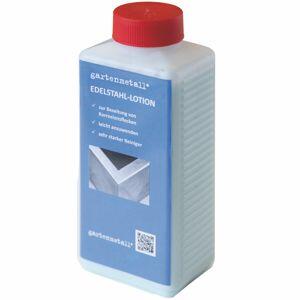
A particularly strong stainless steel cleaner specially developed for removing rust stainson stainless steel is our Gartenmetall® product STAINLESS-STEEL-LOTION. When applied, the surfaces are simultaneously cleaned, visually brightened and maintained with a sealant. For a normal maintenance cleaning of stainless steel, the LOTION is not suitable, as it sharpens the stainless steel surface. Please test the application beforehand on a sample surface!
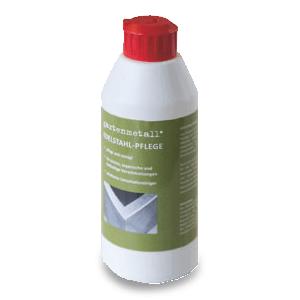
Scouring powders are unsuitable for cleaning stainless steel, as they scratch the surface. Heavily oily and greasy stains can be removed with alcohol-based cleaning agents and solvents, e.g. methylated spirits, isopropyl alcohol or acetone, which are harmless to stainless steel. Mortar and cement splashes can be removed with warm, diluted phosphoric acid. Then rinse abundantly with neutral, ideally demineralized water. Alternatively, vinegar diluted with water, depending on the degree of soiling, is also suitable. The same polishing pastes that are also used for chrome-plated parts are suitable as supplementary care for stainless steel surfaces.
"High-quality stainless steel, material no. 1.4404, AlSI 316L (V4A) or equivalent, material properties according to DIN EN 10088-2. Surface visible sides rotex-ground according to sample. All weld seams pickled and passivated."