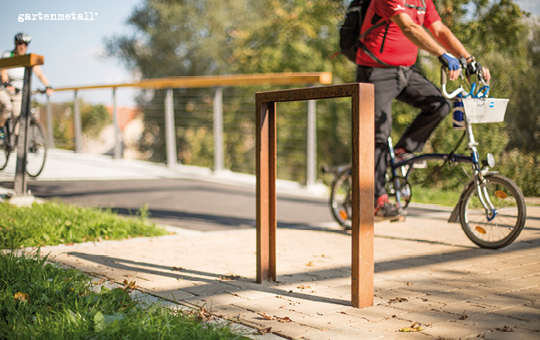

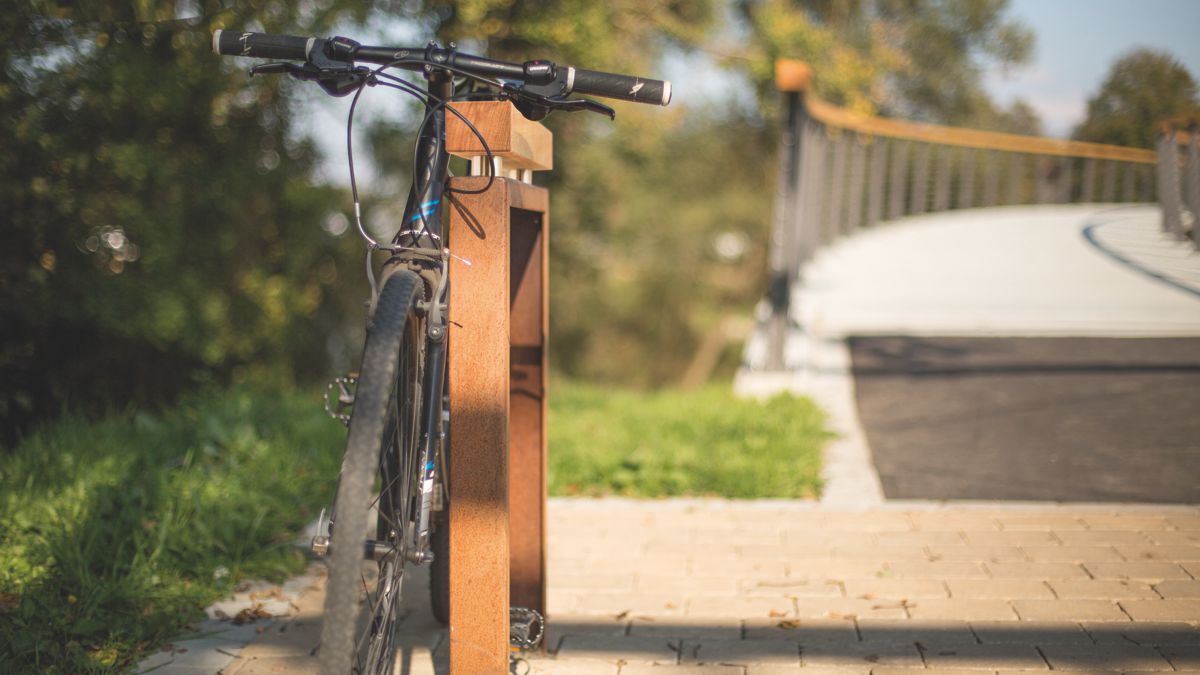
Bicycle leaning against a wooden stand, surrounded by paved path and green grass, with a footbridge and trees visible in the background.
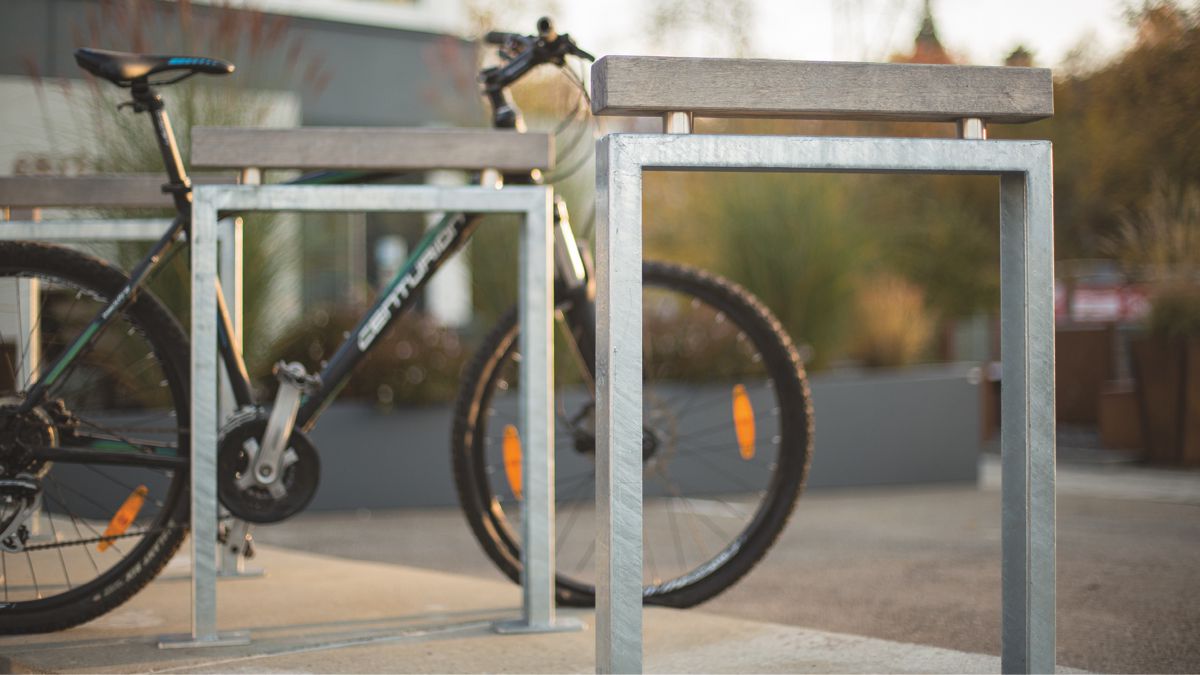
A bicycle is on a concrete floor in a bike rack. In the background, there are blurred plants and a building visible. The bicycle frame reads 'CENTURION'.
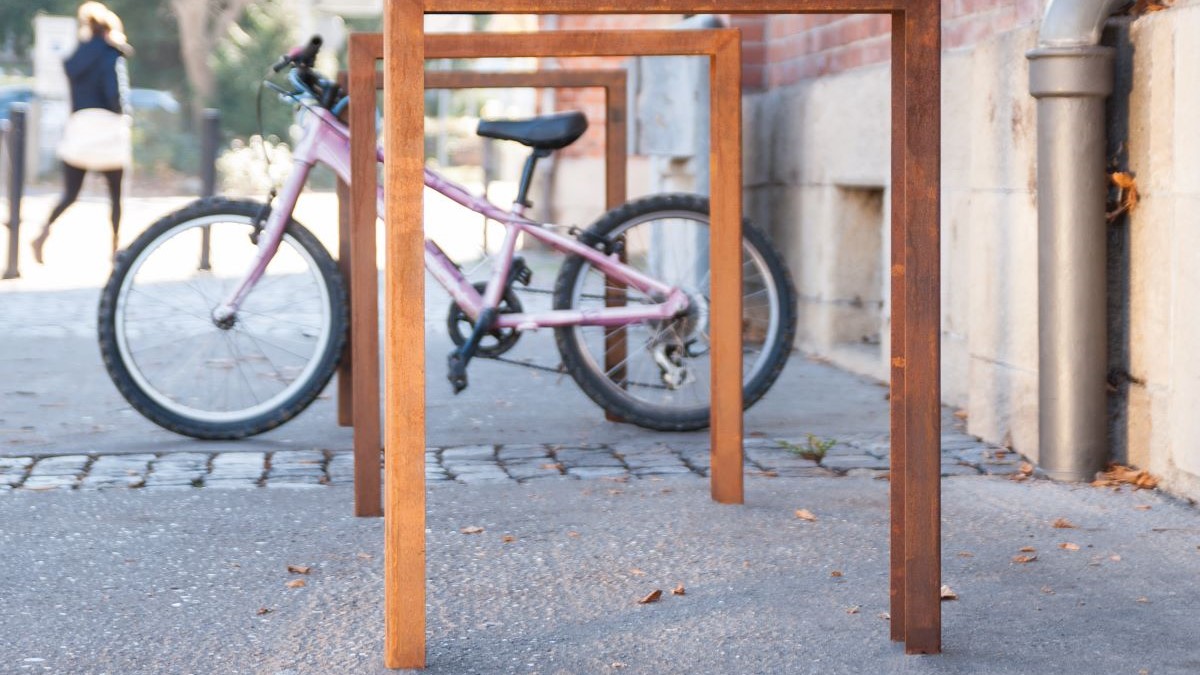
A pink bicycle leans against a table frame on a pavement, in the background a person walks past. A house wall and trees frame the scene.

Bicycle parking facilities for the city

The more cyclists there are on the roads, the more parking facilities for e-bikes and other bicycles should be provided in town centres, outside schools, community centres or public buildings. This ensures that bikes are not left haphazardly against lampposts, railings or fire lanes, but are secured against theft in designated areas using bike racks or bike parking stands.& nbsp;

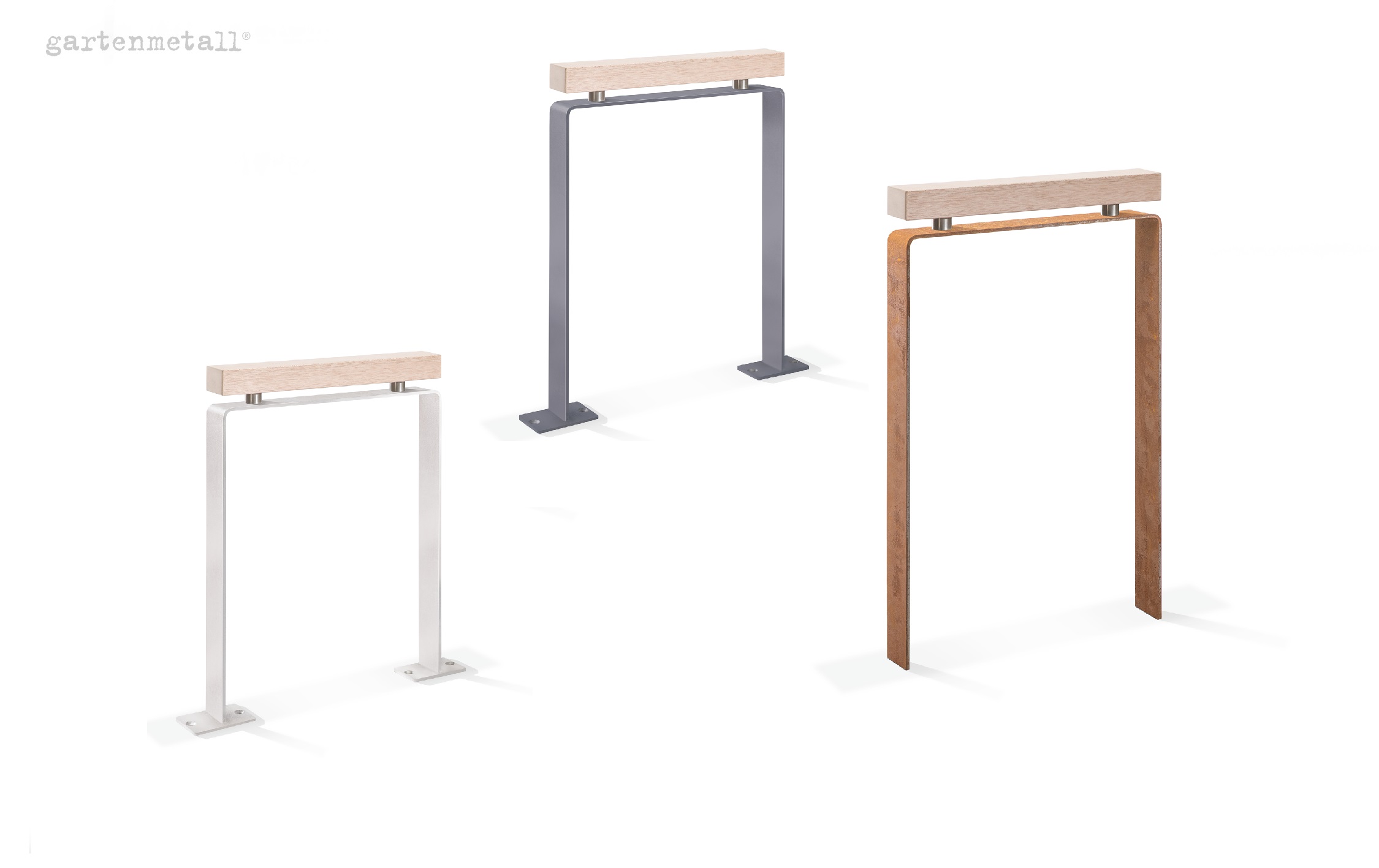
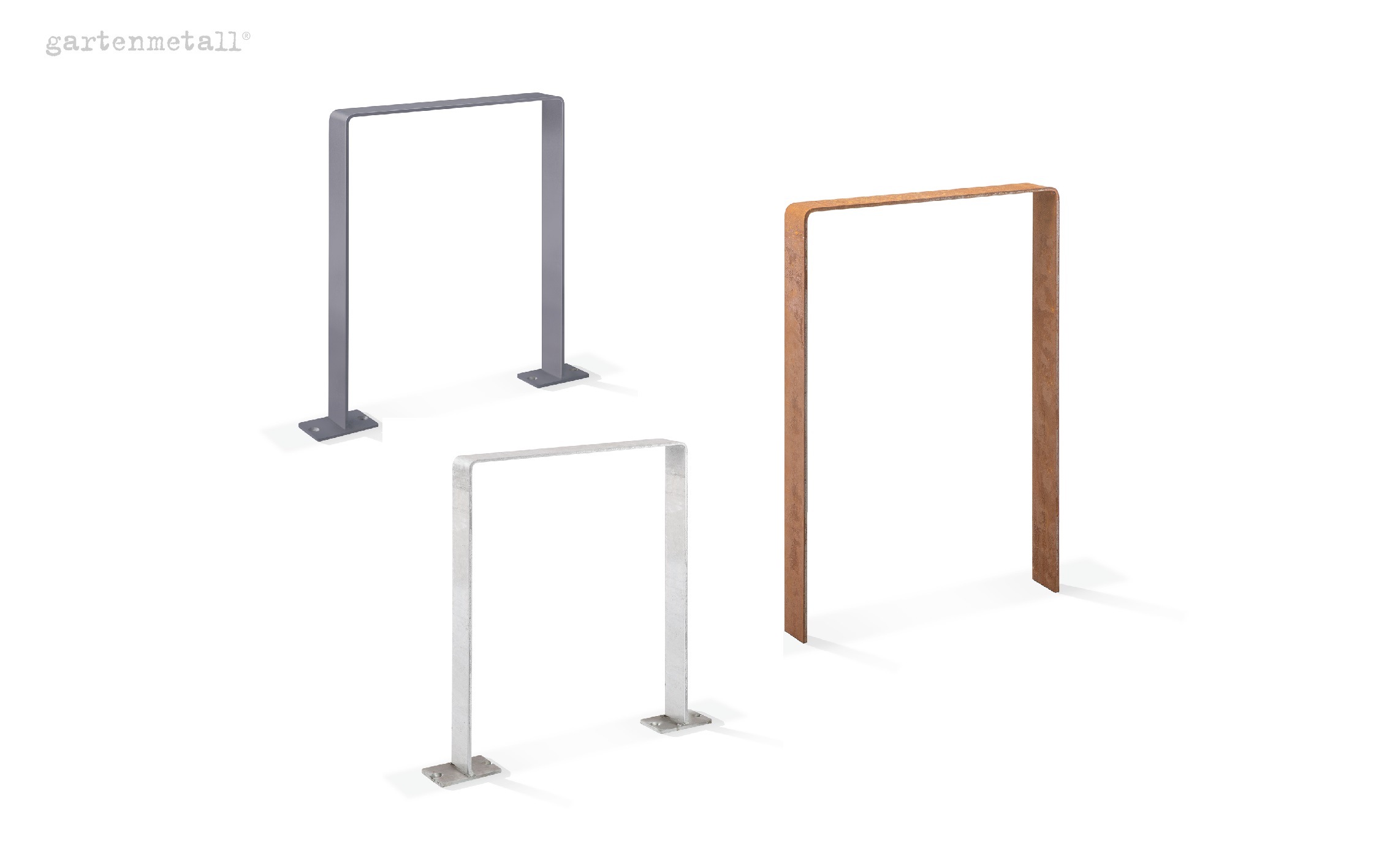
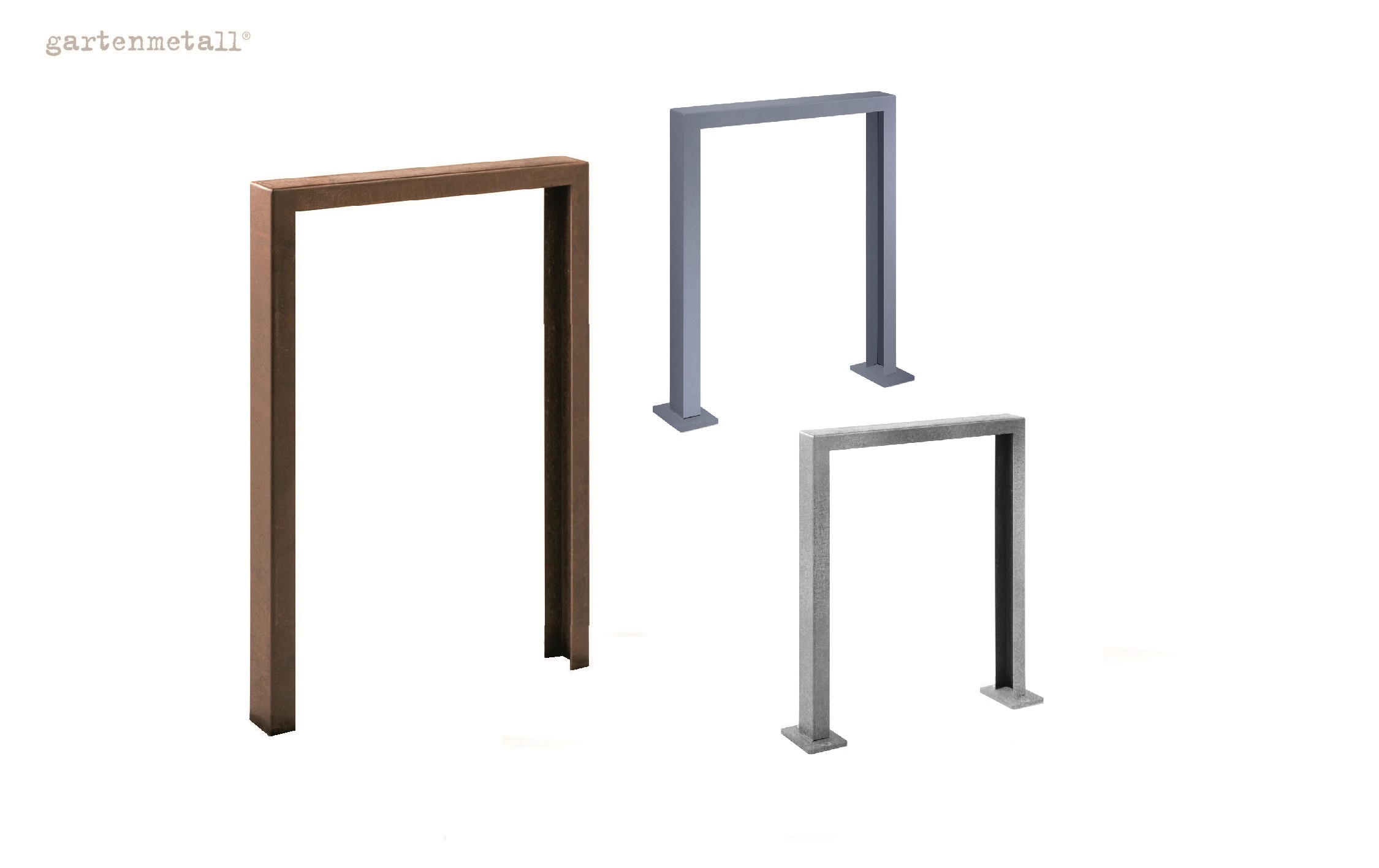
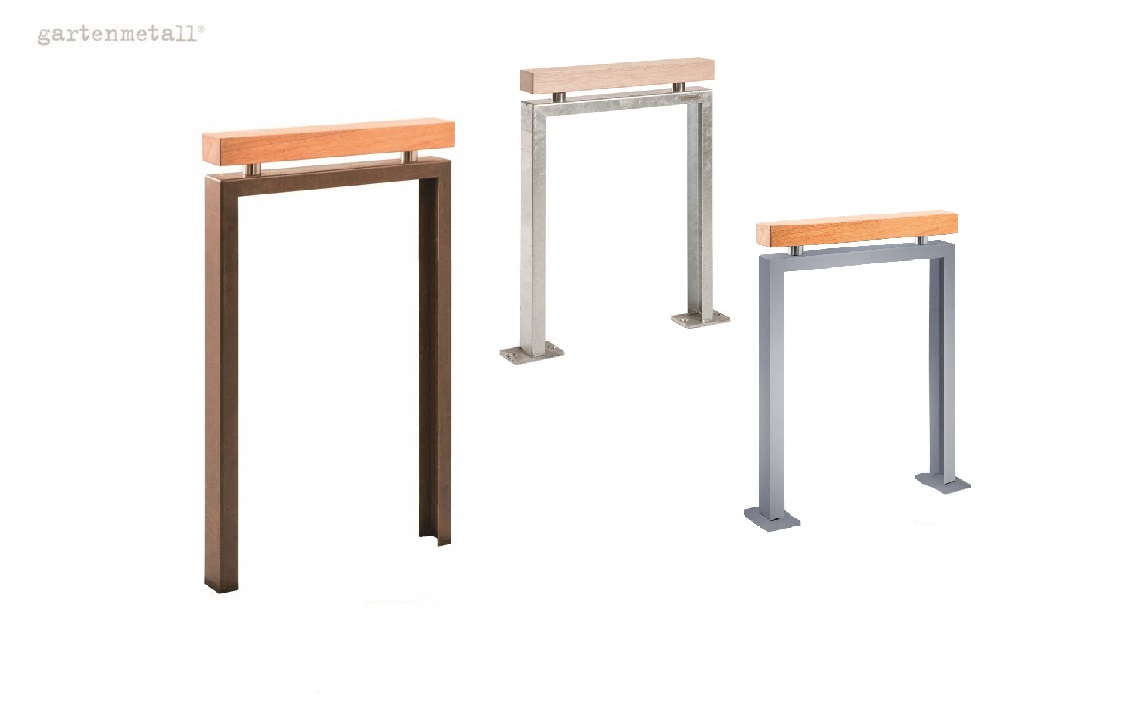
Our metal bike racks are chamfered on all sides, so there is no risk of injury and the bikes can be leaned against them without damaging the frame. Our FREIBURG and OLDENBURG designer bike racks are available in various materials: made from Corten steel, made from  stainless steel, hot-dip galvanised steel or  colour-coated stainless steel. So you’re sure to find the right model for your urban design. FREIBURG is a cycle rack made from metal, OLDENBURG also features a wooden lean-to. Both models are available for setting in concrete or for bolting to a level surface. 

More ideas from the  STREET FURNITURE category can be found here.

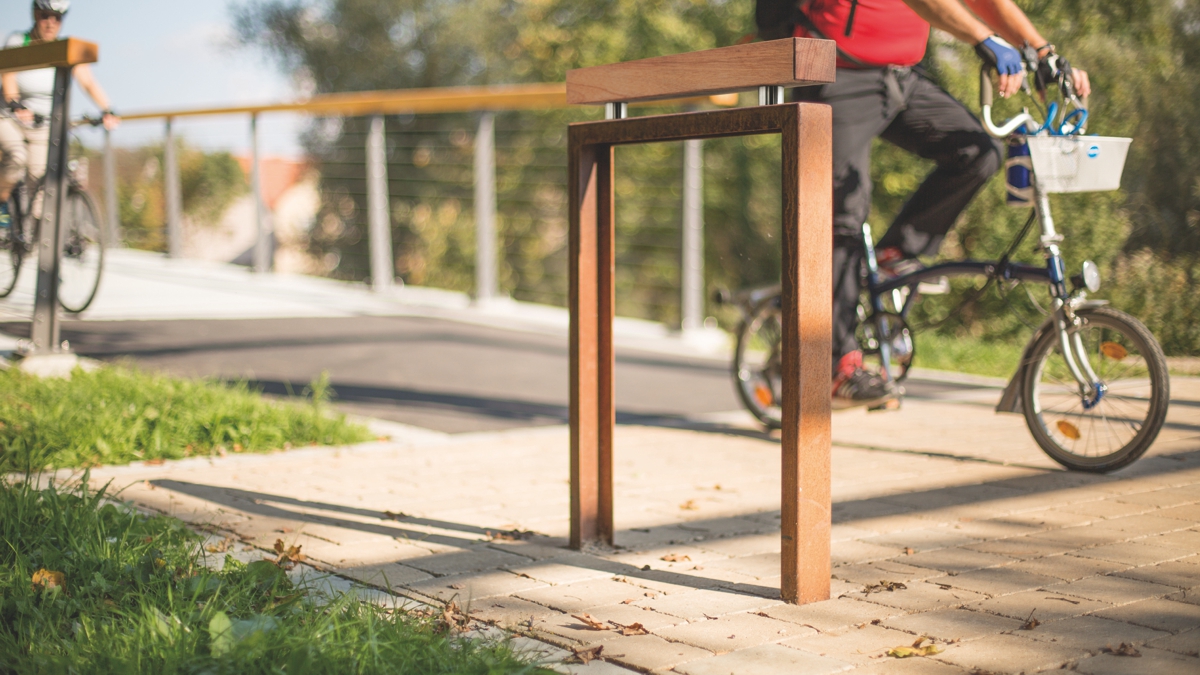
Wooden frame stands on paved ground, two cyclists pass in the background, surrounded by trees and railing, sunny day outdoors.
OLDENBURG bicycle rack with wooden crossbar
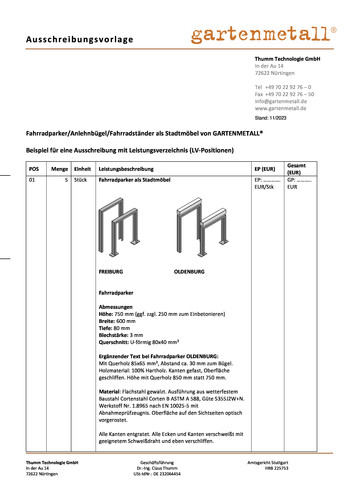
Call for Tenders: BICYCLE PARKING FACILITIES
Technical product information: BICYCLE PARKING RACK

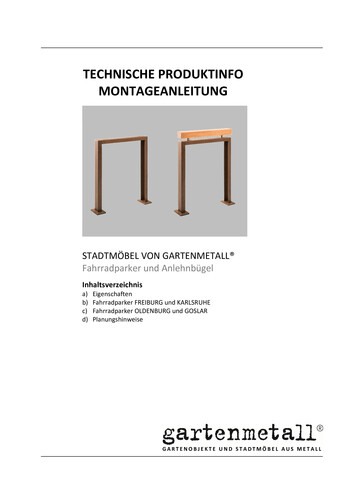
FREIBURG cycle rack: sleek and simple

Our FREIBURG model is a classic amongst cycle racks and stands: the sturdy frame has rounded edges all round and offers plenty of space to lock your bike. FREIBURG can either be set in concrete or bolted down to a level and stable surface.

FREIBURG – screw-on type
FREIBURG – for embedding in concrete

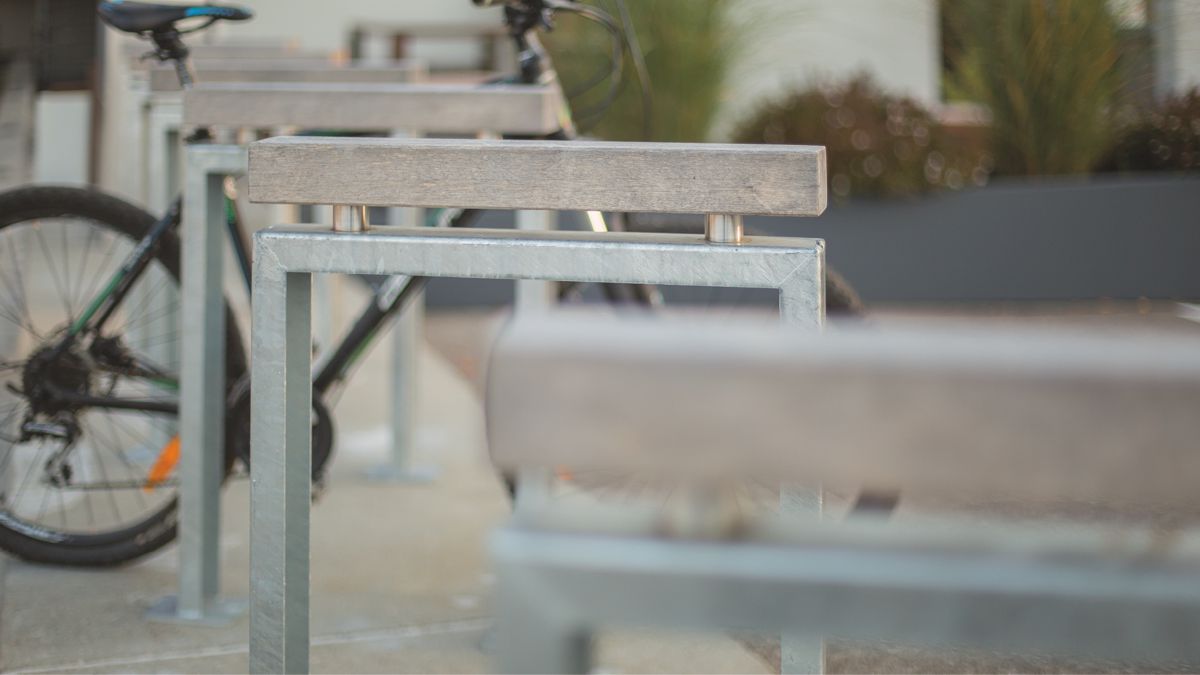
OLDENBURG cycle rack with leaning bar

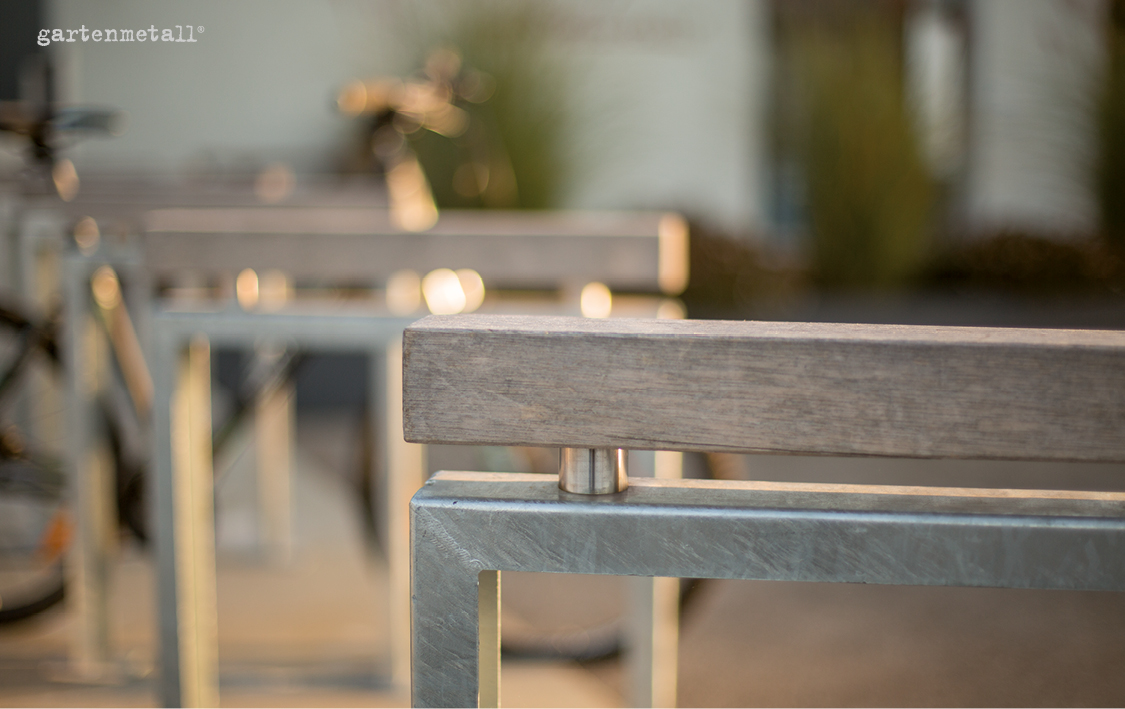
For our OLDENBURG cycle rack, we have fitted a leaning bar made of durable hardwood to the metal frame, which features two spacers. The cross-section of the wood is larger than that of the frame, so that the wood protrudes by approx. 5 mm on all sides. Bicycles can be leaned against the wood in a way that is particularly gentle on the frame. As with the FREIBURG model, there are two mounting options: for setting in concrete in the ground with extended legs, and for bolting down with an additional base plate.

OLDENBURG with a leaning bar to be bolted in place
OLDENBURG with a support bracket for setting in concrete

Planning guidelines:

The installation of recommended cycle parking facilities is governed by Technical Guideline TR 6102, published by the Allgemeiner Deutscher Fahrrad-Club e. V. (ADFC). It sets out requirements regarding the spacing of cycle racks, the areas required and the overall layout of cycle parking facilities. All the bicycle racks we manufacture comply with the requirements specified or recommended in TR 6102. The current guideline can be viewed or downloaded at www.adfc.de/abstellanlagen 

Close-up of a bike rack with a bicycle parked on it. In the background, blurred vegetation and buildings of an urban environment.
In-line cycle rack, OLDENBURG model with leaning bar

Frequently asked questions about cycle racks

Gartenmetall offers four rectangular bicycle racks or bicycle lean-to brackets. FREIBURG has a U-shaped metal cross-section measuring 80 × 40 mm, KARLSRUHE is made from solid flat bar with a cross-section of 80 × 8 mm. OLDENBURG is based on the U-shaped design and features a backrest made from 100 per cent hardwood; GOSLAR combines the solid 80 × 8 mm cross-section with such a hardwood support element. This allows the model to be selected based on both its design and the desired contact area with the bicycle.

The following materials are available for the cycle racks: Corten steel, rotex-polished stainless steel, hot-dip galvanised steel and colour-coated stainless steel are available. This allows the surface to be adapted to the material and colour scheme of the respective outdoor space. Gartenmetall uses weather-resistant structural steel of grade S355J2W+N, with material number 1.8965, for its Corten steel products.

All four standard models are 600 mm wide. The FREIBURG and KARLSRUHE models are 750 mm high above ground; for the version designed to be set in concrete, an additional 250 mm is required for ground anchoring. OLDENBURG and GOSLAR are 850 mm high including the support timber and, in the version for embedding in concrete, also have an additional embedding depth of 250 mm. The versions for bolting are supplied with a base plate measuring 150 × 100 mm.
Yes. Gartenmetall explicitly states that its cycle racks have custom dimensions. As the company manufactures its own products, the dimensions, geometry, type, material, sheet thickness and surface finish can also be tailored to specific projects. For detailed planning, enquiries should therefore be made regarding the desired design, including the required dimensions and the intended method of fixing.
Both installation methods are available. For permanent integration into the ground, there are cycle racks designed to be set in concrete with extended legs. Alternatively, versions for bolting or screwing onto an existing, level and stable foundation are available; the standard base plates measure 150 × 100 mm. Which variant is suitable depends primarily on the existing sub-base and the planned layout of the area.
In addition to the metal frame, the OLDENBURG and GOSLAR models feature a leaning block made from 100 per cent hardwood. According to the current technical product information, the cross-section of the wood measures 85 × 65 mm and protrudes beyond the metal frame. As a result, when the bicycle is leaned against something, the frame comes into contact with the wood rather than the metal, which helps to protect the materials when the bicycle is parked.
Yes. The cycle racks can be used individually or in rows. For row installations, Gartenmetall also offers, on request, an underground coupling. This is used to ensure that several racks are positioned precisely and securely in relation to one another during installation. This is a particularly relevant planning option for larger cycle parking facilities.
Corten steel develops its characteristic rust patina when exposed to alternating wet and dry weather conditions. Gartenmetall points out that runoff water can cause rust-coloured deposits on adjacent paving or natural stone. When designing a Corten steel bicycle rack, it is therefore important to consider, right from the planning stage, where rainwater and rust water can drain away and which surfaces are immediately adjacent.
For fixed bicycle parking systems, DIN 79008 is currently the applicable standard. It sets out requirements and test specifications for bicycle parking facilities and, according to the ADFC, replaced the previous Technical Guideline TR 6102 in 2016. Gartenmetall describes its cycle parking systems as having been developed in accordance with, or closely following, the requirements of DIN 79008. No specific ADFC certification for the models is indicated on the Gartenmetall product page; therefore, in the context of tenders, the evidence and planning requirements specified for the respective project should be checked separately.

+49 (0) 70 22 / 92 76-0 Call

Mon.-Thurs. 7:00 a.m. – 4:00 p.m. Fri. 7:00 a.m. – 3:00 p.m.

Message via WhatsApp

Chat on WhatsApp

Contact form

Fill out our contact form

CONTACT